The code
Computes every figure
Emissions, budgets, and forecasts come from fixed arithmetic, the same way every time, and the arithmetic is tested against known results.
The platform
Connects the records an organisation already holds: meter feeds, fuel logs, weigh-ins, and purchase records. The Board, the managers, and the auditor read the same sealed figures.
Who does what
The first question an auditor asks about an AI platform is whether the AI made the figures up. It cannot: the code computes, the model explains, and an expert decides.
The code
Emissions, budgets, and forecasts come from fixed arithmetic, the same way every time, and the arithmetic is tested against known results.
The model
The model drafts the commentary, explains each finding, and suggests reduction options, with its reasoning shown. When it is not sure, it sends the item to a person instead of guessing.
The people
A named person approves, corrects, or excludes every finding. A correction is a new version; the original record never changes.
Screens
The Board, the managers, and the auditor work from the same sealed figures, so nobody reconciles two versions of the truth.
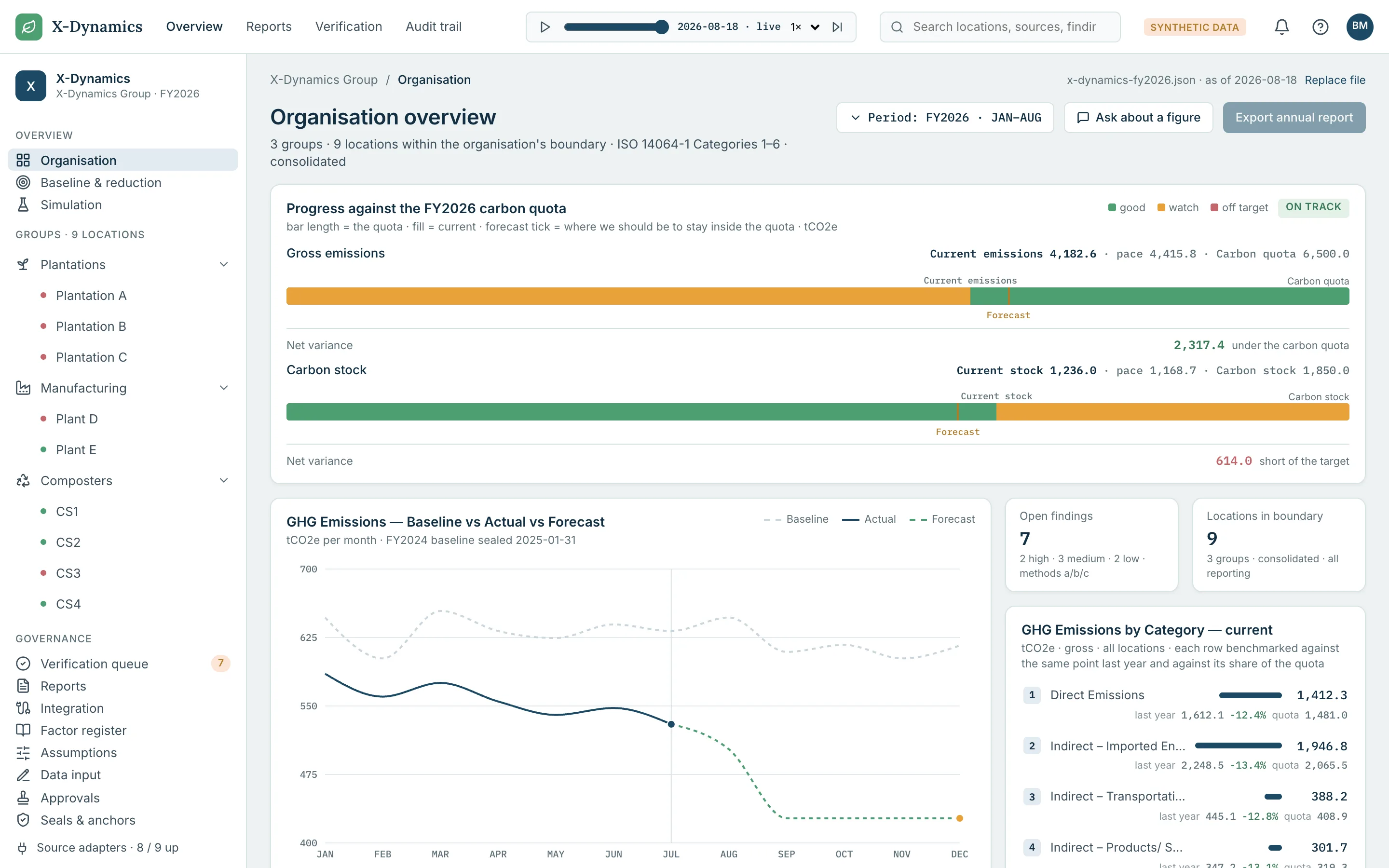
01 / 08 · For the Board
Current emissions against the carbon quota, current stock against the carbon stock target, and where the year is heading, on one screen.
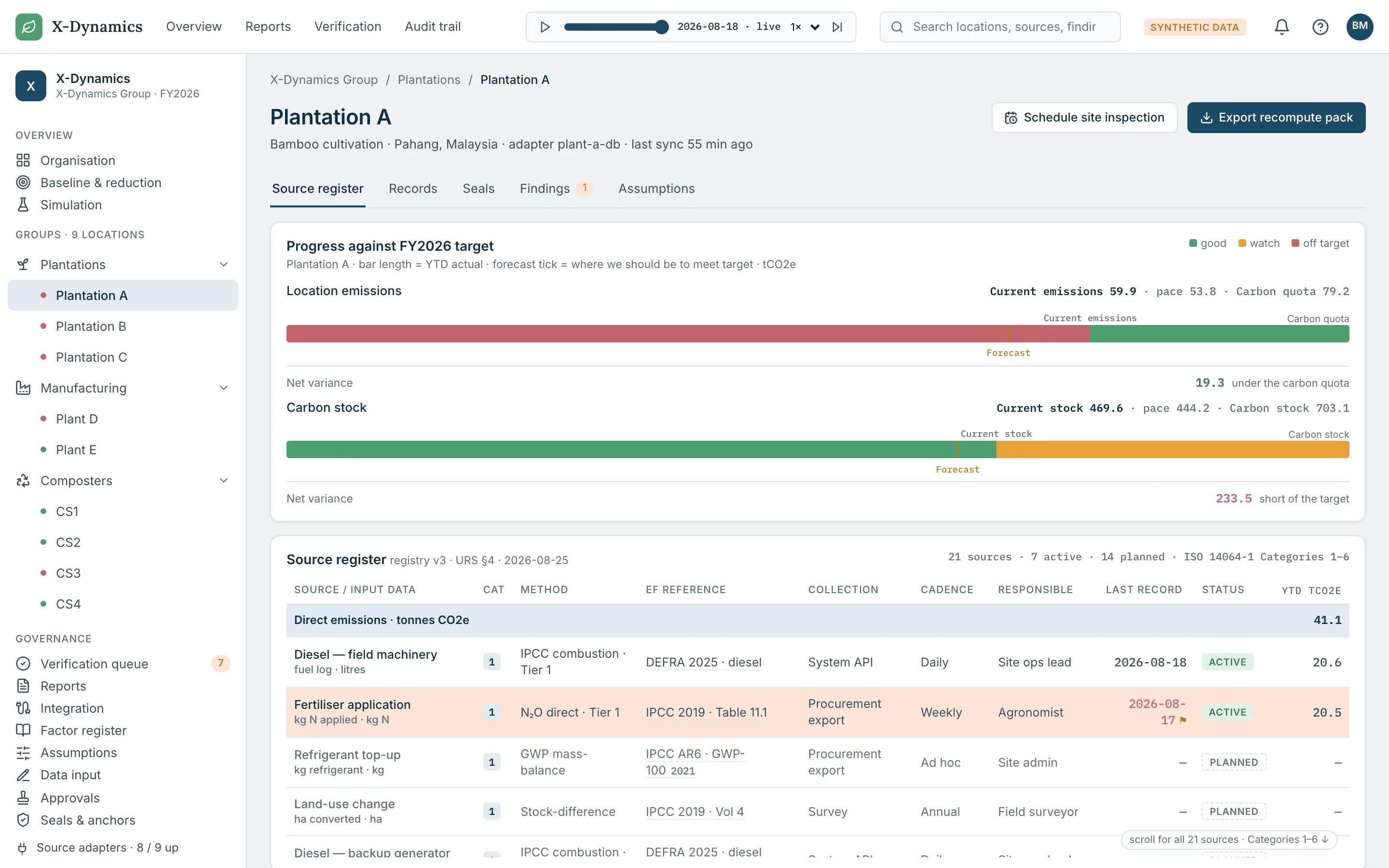
02 / 08 · For the location manager
Customisable granularity: the location, the area, the department, and the device behind each movement, with the person responsible for it.
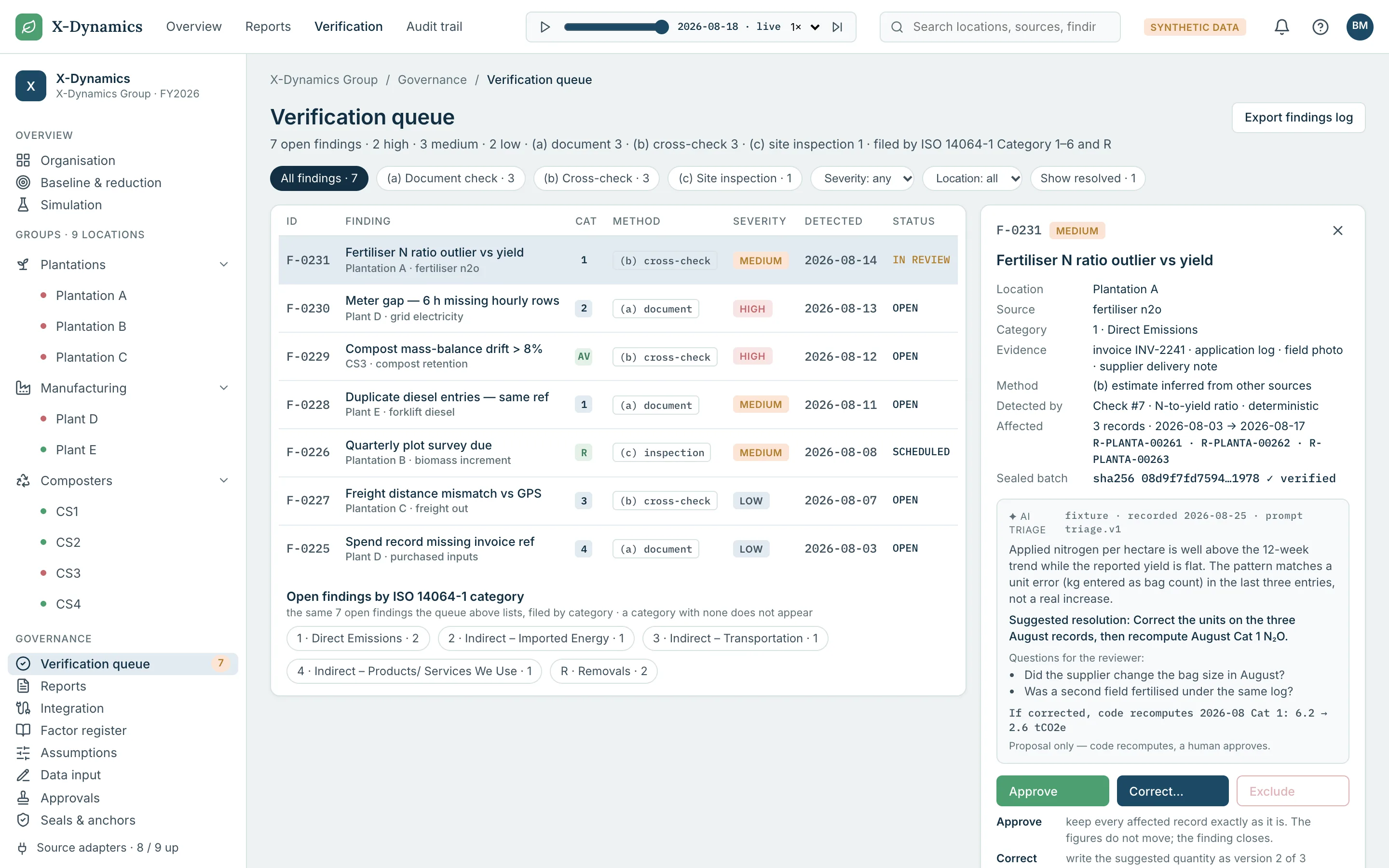
03 / 08 · For the reviewer
Each finding arrives with its evidence. A person approves, corrects, or excludes it before it reaches a report.
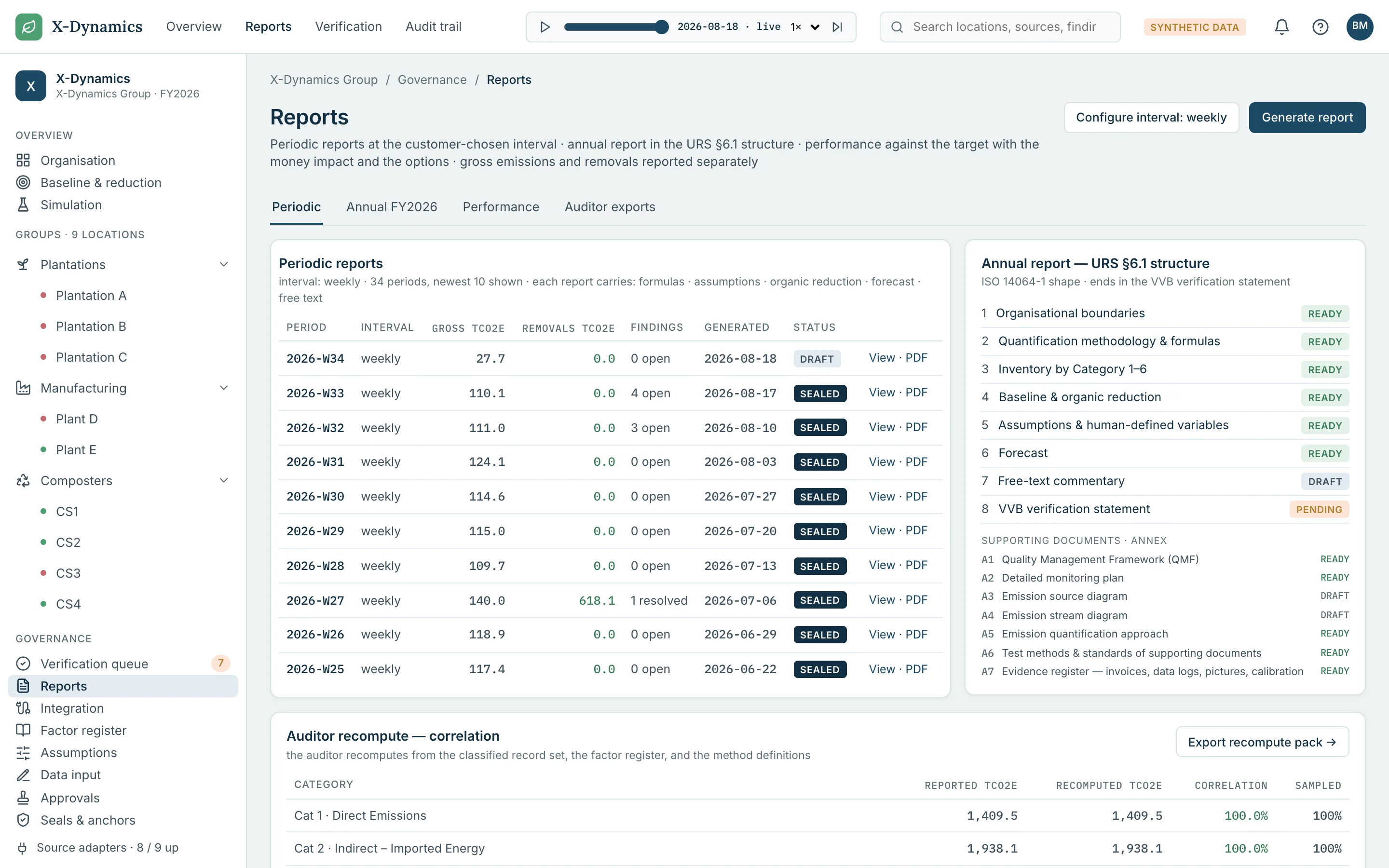
04 / 08 · For the people who sign
Periodic, annual, and audit reports in the framework the organisation reports to, with the trail behind every figure attached.
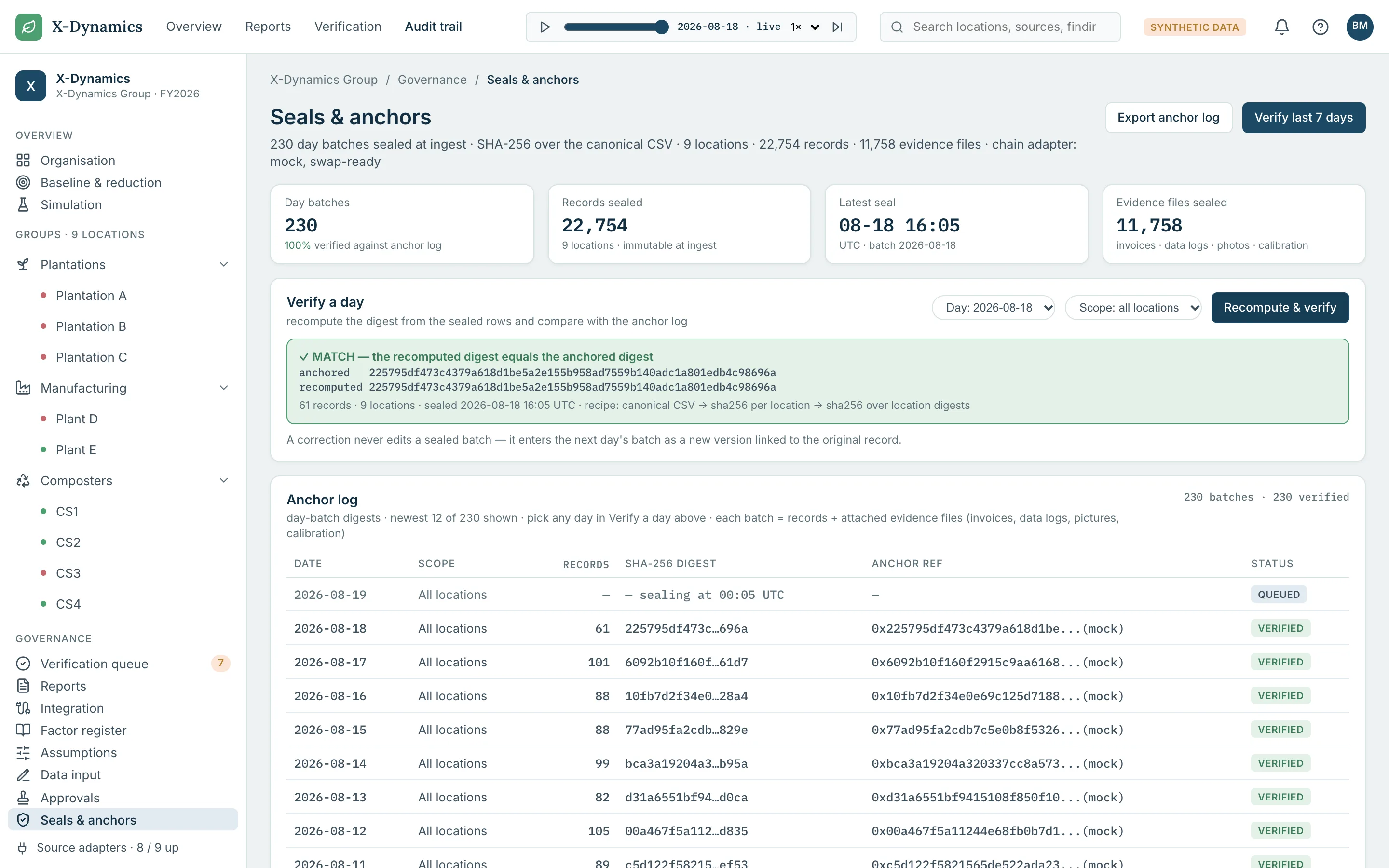
05 / 08 · For the auditor
Any day of data, verified against the seal it received on arrival, in seconds and from anywhere.
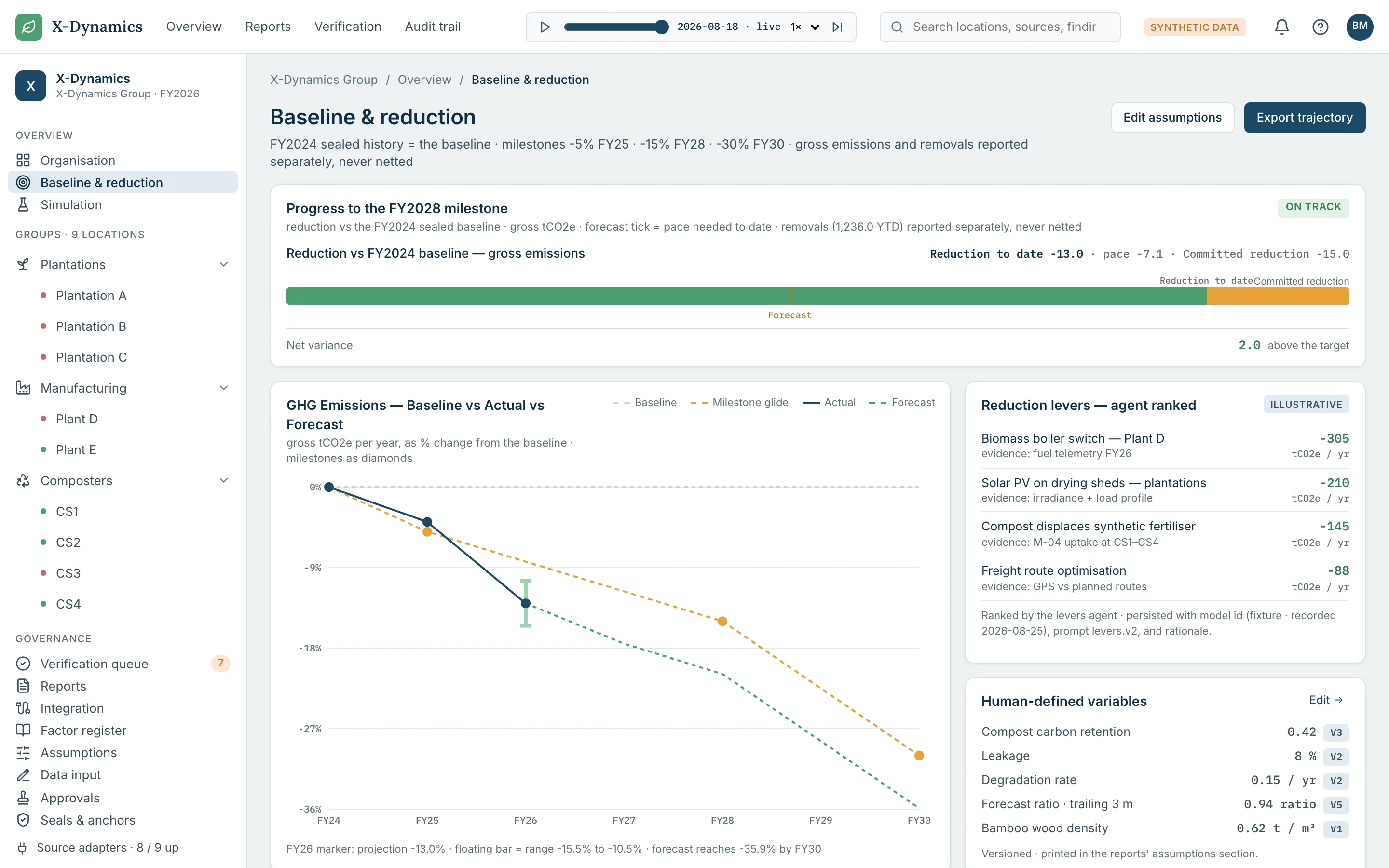
06 / 08 · For the sustainability lead
Progress against the baseline and each milestone, and which actions moved it. A projection is labelled as a projection.
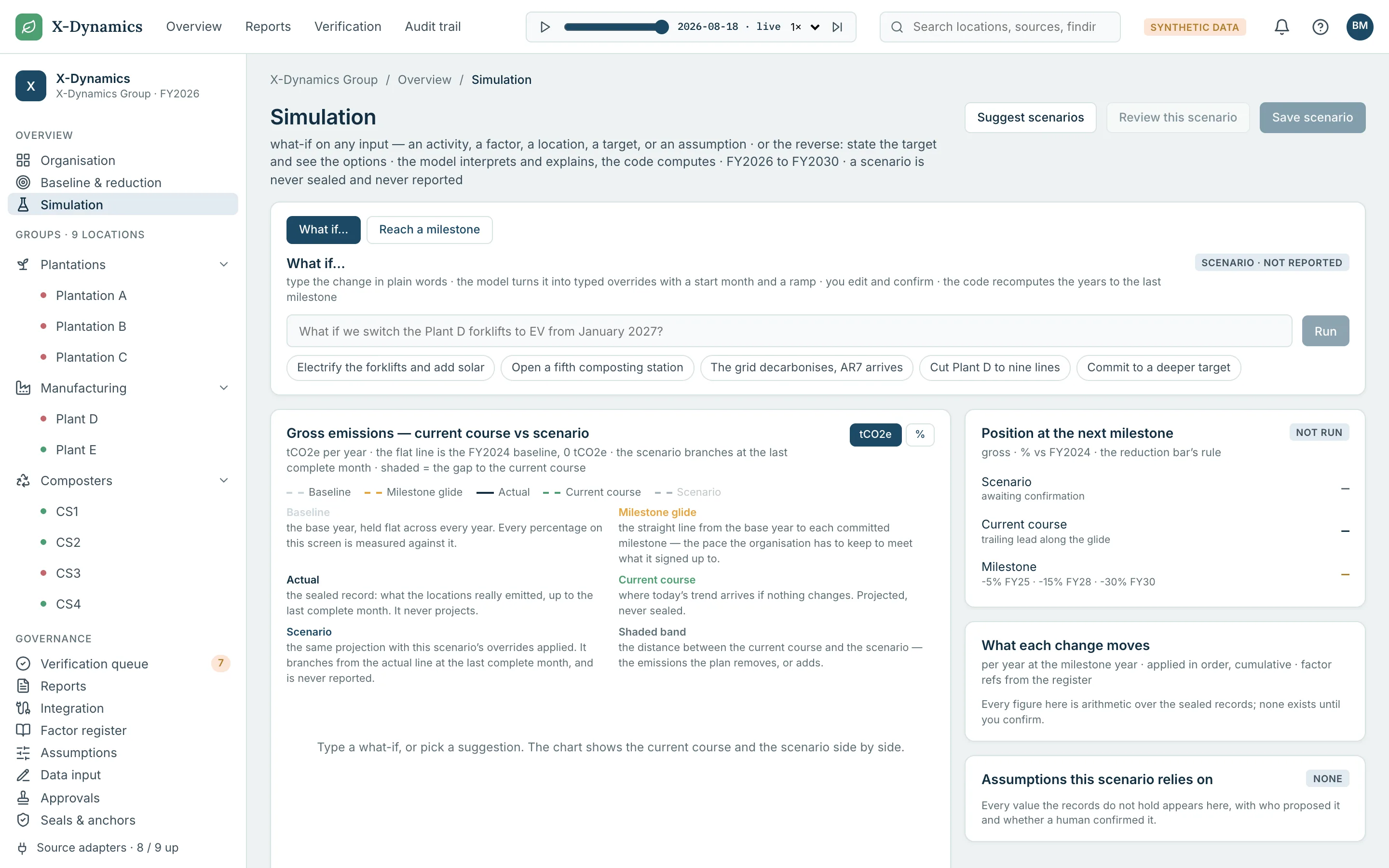
07 / 08 · For the decision-maker
A what-if question in plain words, and its effect on the target before the money is spent. The model proposes, the code computes, and an expert confirms.
08 / 08 · For the controller Planned
Approved changes reach connected equipment from one central system. The assigned controller commits each one, and the audit trail keeps it.
The factor register, the assumptions, data input, receipts, approvals, and integration. A photo of a fuel receipt becomes a record once a person confirms the litres, so nobody retypes it. Every change to reported data follows an approval workflow.
Sealed on arrival
Each day of data receives a SHA-256 digest the moment it arrives. The auditor checks a trail instead of rebuilding one, remotely and in seconds.
A seal proves the rows did not change. It does not prove the meter was right. That is the job of the calibration records and the checks in the verification queue, and the platform keeps both.
No smoke and mirrors, just proof
Reporting frameworks
A regulator may ask for Categories 1 to 6 and a lender for Scopes 1 to 3. Both come from the same sealed records, with no rework. Gross emissions and removals sit side by side and are never netted.
Category 1Scope 1
Category 2Scope 2
Category 3Scope 3
Category 4Scope 3
Category 5Scope 3
Category 6Scope 3
Categories as per ISO 14064-1:2018. Scopes as per the GHG Protocol.
Trust is the product
A correction is a new version linked to the original, with who made it and when.
Each approval, correction, and exclusion carries a name and a time. A change to a sealed figure needs a second person to approve it.
Each suggestion carries the model, the prompt version, and the reasoning. A claim with no traceable source is held, not shown as fact.
The first session runs on a worked example. The second runs on one dataset the organisation already holds, such as a month of meter readings or fuel logs, with the evidence behind each figure.